Affiliate marketing on Pinterest is a way to earn commissions by recommending products and services through helpful Pins. When someone clicks your affiliate link and completes a qualifying purchase or action, you may earn a commission. You do not need to create your own product to get started.
If you live in the USA, UK, Canada, or Australia—or want to reach people in these countries—Pinterest can be a useful platform for building an audience. The key is to choose the right niche, create valuable content, and recommend products that match what people are searching for.
Why Do Beginners Struggle to Make Money with Pinterest Affiliate Marketing?
Many beginners start by posting product images with affiliate links and expect sales within a few days. However, Pinterest users often need a reason to click. They may be looking for ideas, comparisons, tutorials, inspiration, or solutions to everyday problems.
Another common mistake is choosing products only because they offer high commissions. A product may pay well, but it will not necessarily convert if it does not match your audience’s interests. Beginners should focus on relevant products, useful content, and clear recommendations rather than promoting everything they find.
Consistency also matters. One Pin is rarely enough to test a topic properly. You need to experiment with different designs, titles, keywords, and landing pages. Review your Pinterest analytics to understand which Pins attract impressions, clicks, and meaningful engagement.
How to Start Affiliate Marketing on Pinterest as a Beginner
Choose a Profitable Pinterest Niche
Your niche determines the products you promote and the audience you attract. Start with a topic you understand or are willing to research carefully.
Here are some beginner-friendly niche ideas for audiences in the USA, UK, Canada, and Australia:
- Home decor: Small-space organization, bedroom decor, storage solutions, and home office ideas.
- Passive income and blogging: Blogging tools, website hosting, email marketing software, and creator resources.
- Beauty and skincare: Beauty tools, skincare accessories, and makeup organizers.
- Fashion: Outfit inspiration, seasonal clothing, accessories, and styling guides.
- Personal finance tools: Budget planners, expense trackers, and financial education resources.
- Travel: Travel accessories, packing organizers, and travel planning tools.
- Digital products: Templates, printable planners, productivity tools, and design resources.
Choose a niche with enough content ideas and products to promote over time. Do not select a niche based on commission rates alone. Consider audience demand, competition, product quality, and the availability of suitable affiliate programs.
Create a Pinterest Business Account
A Pinterest business account gives you access to analytics and other business features that can help you evaluate your content.
Follow these steps:
- Sign up for Pinterest or convert your existing account to a business account.
- Choose a clear profile name related to your niche.
- Write a short bio explaining what people can learn or discover through your account.
- Add your website if you have one.
- Create relevant boards using descriptive titles.
- Publish original Pins that match the topics of those boards.
For example, if your niche is passive income, you could create boards such as Passive Income Ideas for Beginners, Blogging Tips, Affiliate Marketing Tips, and Online Business Ideas.
Keep your account focused. A clear topic makes it easier to create relevant content and understand which audience you want to reach.
Find Affiliate Programs That Match Your Audience
Affiliate programs allow you to earn commissions by referring customers to participating businesses. Each program has its own eligibility requirements, commission structure, payment rules, and promotional restrictions.
Some programs and networks worth researching include:
- Amazon Associates: Products available through the relevant Amazon marketplace.
- Impact: Affiliate partnerships with participating brands.
- Awin: Advertisers across multiple product and service categories.
- ShareASale: A network historically known for a range of merchants; check its current platform arrangements and availability.
- PartnerStack: Software and business-to-business product partnerships.
Availability varies by country, advertiser, and applicant eligibility. Before applying, check whether the program accepts publishers based in your country and permits promotion through Pinterest.
If your audience is mainly in the USA, UK, Canada, and Australia, consider whether the advertiser can serve customers in those markets. For physical products, a local marketplace or retailer may be more suitable than a store that ships only to another country.
Important: Read the affiliate agreement before sharing any links. Some programs restrict certain traffic sources, link formats, paid promotions, or direct social media linking.
READ MORE – Pinterest Account Name Ideas.
Research Keywords Before Creating Pins
Pinterest works as a visual discovery and search platform. Users enter phrases to find ideas, products, and solutions. Keyword research helps you understand the language they use.
Start by typing your main topic into Pinterest’s search bar. Review the autocomplete suggestions and related search phrases that appear. These can provide ideas for long-tail keywords, although they do not prove a specific search volume or competition level.
For example, a passive income account could explore keywords such as:
- Passive income ideas for beginners
- Side hustles you can do from home
- Best blogging tools for beginners
- Digital products to sell online
- Affiliate marketing tips for beginners
- Budget planner printable
- Home office organization ideas
Choose keywords that closely match the content you intend to publish. Avoid adding popular keywords that have little connection to the actual Pin or destination page.
For a USA, UK, Canada, and Australia audience, use clear English and consider local differences in spelling, currency, products, and terminology where relevant. You can also create separate content for country-specific offers rather than assuming every product is available in all four markets.
Create Attractive and Helpful Pinterest Pins
Your Pin should communicate its value quickly. A good design attracts attention, but the content behind it must also meet the user’s expectations.
You can create Pins using tools such as Canva. Start with a vertical design, readable typography, strong contrast, and one clear message.
For example, if you promote a blogging tool, you might create a Pin titled “5 Blogging Tools Every Beginner Should Know.” The design should help users understand what they will learn rather than simply displaying a product logo.
Follow these practical tips:
- Use clear, readable text that remains easy to understand on mobile devices.
- Choose high-quality images you own or have permission to use.
- Keep the design consistent with your niche.
- Write a descriptive Pin title and a useful description.
- Include relevant keywords naturally.
- Use a destination link that matches the promise made in the Pin.
- Test different creative approaches to learn what your audience prefers.
Avoid misleading claims such as guaranteed earnings, instant passive income, or effortless results. If you discuss potential earnings, explain that results vary.
Add Affiliate Links Correctly
Once you have joined an affiliate program, check whether its terms permit direct affiliate links on Pinterest. Pinterest’s affiliate guidelines require original, valuable content and transparency about commercial links. You must also follow its other applicable policies.
You generally have two possible approaches:
Option A: Link directly to an affiliate product
Create a Pin that describes the product or explains why it may be useful. If the program and Pinterest allow direct linking, add your approved affiliate URL as the Pin destination.
Option B: Link to a helpful article on your website
Publish a tutorial, product comparison, review, or resource guide on your website. Add relevant affiliate links to the article, then link your Pin to that page.
The second approach gives you more room to explain product features, compare alternatives, and answer common questions. It also gives visitors useful information before they decide whether to purchase.
Whichever approach you choose, test your destination link, avoid misleading redirects, and follow the relevant program’s rules. Do not disguise affiliate links or use unsupported link-shortening services.
Write SEO-Friendly Pin Titles and Descriptions
A good Pin title tells users what they will get by clicking. The description adds context and uses relevant phrases naturally.
For example:
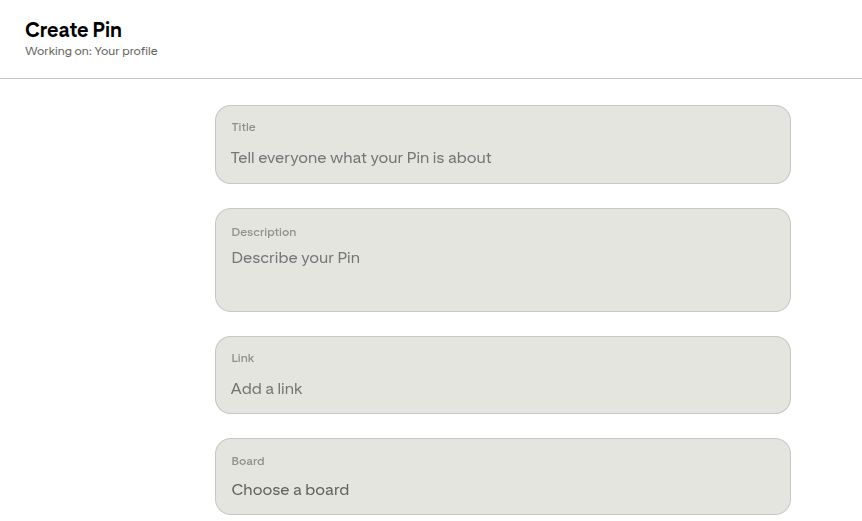
Pin title: 7 Passive Income Ideas for Beginners Working from Home
Pin description: Explore beginner-friendly passive income ideas, from creating digital products to starting a blog. Learn what each option involves, the tools you may need, and how to choose an approach that fits your skills and budget.
The example is designed to set realistic expectations rather than promise a particular income.
Use the main keyword where it fits naturally. Add related phrases only when they accurately describe the content. The purpose is to help the right audience discover your Pin, not to repeat the same phrase as many times as possible.
Publish Consistently and Test Different Ideas
You do not need to publish dozens of Pins every day to begin. A manageable schedule is better than creating rushed or repetitive content.
Try this beginner-friendly weekly plan:
- Research a few relevant topics and search phrases.
- Create several original Pins around useful content.
- Test different titles, images, and layouts.
- Link each Pin to the most relevant permitted destination.
- Review the results and improve your next batch.
For a single article, you can create multiple genuinely different Pins that highlight different aspects of the same resource. For example, an article about affiliate marketing might have one Pin about choosing a niche, another about keyword research, and another about creating product comparisons.
Avoid mass-producing near-identical Pins or posting repetitive affiliate content purely to manipulate distribution. Focus on giving users a fresh reason to save or click each Pin.
Track Your Results and Improve Performance
Pinterest analytics can help you understand how people interact with your content. Focus on meaningful metrics rather than judging success by impressions alone.
| Metric | What it tells you |
|---|---|
| Impressions | How often your Pins appeared on screen |
| Saves | How often users saved your Pins |
| Outbound clicks | How often users clicked through to a destination |
| Affiliate link clicks | How often your affiliate links were clicked, where tracking is available |
| Conversions | Qualifying purchases or actions attributed to your referrals |
If a Pin receives impressions but few outbound clicks, test a clearer title, a more useful design, or a stronger match between the Pin and its destination.
If users click but do not purchase, review the product’s relevance, price, availability, landing page, and the audience’s buying intent. Low conversions do not always mean the Pin is poorly designed.
Use the reporting tools provided by your affiliate program to check approved referrals and commissions. Remember that clicks, conversions, and commission reports may use different attribution rules and reporting periods.
Follow Affiliate Disclosure and Platform Rules
Transparency is essential when earning money through affiliate marketing. Users should understand that you may receive a commission if they purchase through your links.
Place a clear disclosure close to the affiliate link or recommendation. For example:
Disclosure: This post contains affiliate links. I may earn a commission if you purchase through these links, at no additional cost to you.
Use wording that accurately describes your relationship with the advertiser and meets the applicable legal and program requirements. Some programs require specific statements in addition to a general disclosure.
For example, Amazon Associates requires its prescribed associate identification statement and clear, conspicuous link-level disclosures. Review the current agreement for the specific Amazon marketplace you use.
Also consider the relevant rules for your audience:
- USA: Review the Federal Trade Commission’s guidance on endorsements and affiliate disclosures.
- UK: Check the Advertising Standards Authority’s guidance on clearly identifying affiliate marketing and advertising.
- Canada: Review the Competition Bureau’s guidance on influencer marketing and material connections.
- Australia: Consider the Australian Competition and Consumer Commission’s guidance on advertising, endorsements, and misleading claims.
Rules can differ by jurisdiction and situation. A short disclosure is useful only if it is clear, visible, and appropriate for the content and applicable requirements.
Useful official resources:
- Pinterest: Commercial and Branded Content Guidelines
- USA: FTC Endorsement Guides
- UK: Advertising Standards Authority
- Canada: Competition Bureau Canada
- Australia: Australian Competition and Consumer Commission
Benefits of Pinterest Affiliate Marketing for Beginners
One major benefit of Pinterest affiliate marketing is that you can start without developing your own product or holding inventory. You can focus on researching products, creating helpful content, and sending relevant visitors to approved affiliate destinations. Pinterest can also help people discover content beyond your existing followers, depending on search relevance, engagement, and distribution.
Another advantage is the opportunity to build a content library over time. A useful Pin may continue attracting attention after publication, although ongoing traffic is never guaranteed. If you also run a website, you can use Pinterest to introduce readers to detailed tutorials, comparison articles, and product guides. This approach can create multiple opportunities to earn commissions while giving users more information to make informed decisions.
READ MORE – Passive Income Ideas for Beginners.
Final Thoughts
Starting affiliate marketing on Pinterest as a beginner does not require a complicated strategy. Choose a niche you understand, research relevant keywords, join suitable affiliate programs, create original Pins, and make sure every recommendation offers genuine value. Begin with a manageable publishing schedule and use analytics to learn what your audience responds to.
If your goal is to reach readers in the USA, UK, Canada, and Australia, pay attention to local product availability, program eligibility, and disclosure requirements. Most importantly, do not expect immediate income or rely on a single Pin to generate sales. Treat affiliate marketing as a long-term learning process, focus on building trust, and improve your content based on real results.